

THE STANDARD CONTINUED
Part 6 of the “Winning Pedigree” Series by Michael Pilsitz
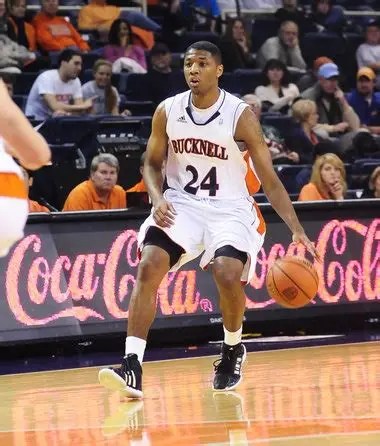
The Steelton Guard
From 2nd Street to the Dance.
The mill was a shell of itself, the town was changing, but Roller Basketball still had enough foundation left to produce a guard trusted to lead a championship level Division I basketball program.
Ryan Hill went right into the Division I basketball fire. He played in every game as a freshman at Bucknell. Hill’s story is not about hype. It is not built around gaudy numbers or volume scoring. It is built around something quieter, and in many ways, more revealing: trust.
The kind of trust that gets a young guard on the floor early.
The kind of trust that keeps him in every game.
The kind of trust that eventually places the ball in his hands to run a Division I offense.
And for those who understand where he came from, that trust makes perfect sense.
Before Bucknell trusted Ryan Hill with its offense, Steelton trusted him with a championship standard. As a sophomore, Hill was the point guard on our 2008 PIAA Class AAA state championship team—a role that said everything about how early his steadiness, toughness, and command were recognized.
Point Guard
2010-2013 Bucknell University
Starting Guard / Key Reserve
51 Career Starts / 124 Games Played
Played in every game his freshman year
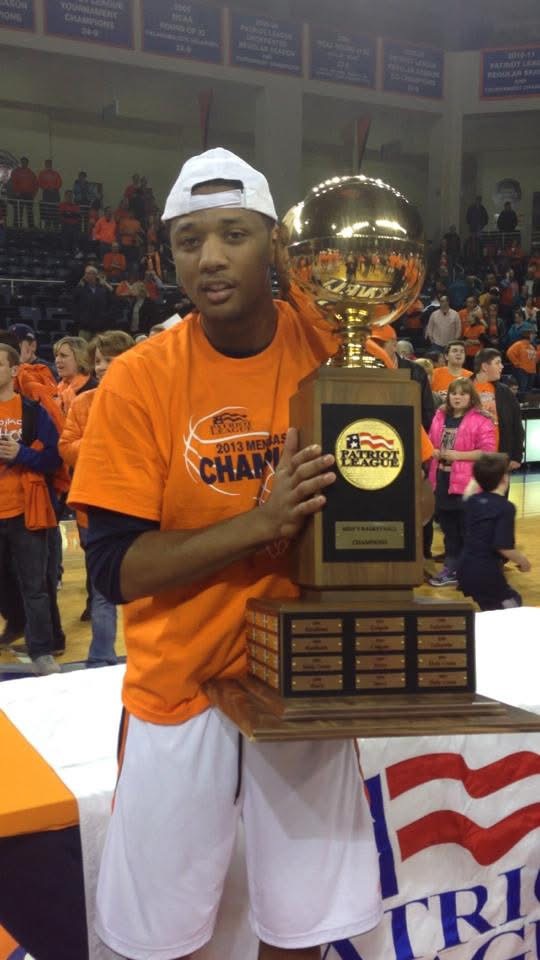
Patriot League Champions (2011, 2013)
NCAA Tournaments (2011, 2013)
2x – Top 10 Games Played (1st 2013 – 34) (8th 2011 – 32)
Top 10 Patriot Defensive Win Share (2011-2012)
Top 20 Patriot Games Played (14th 2012 – 33)
Top 20 Patriot Assists (2011-2012)
Career High 8 Assists vs Colgate
Bucknell’s own description of Hill helps tells the story. He made an immediate contribution in the backcourt, got an early taste of Division I basketball, and eventually took over as the starting point guard. He was described as steady, consistent, athletic, competitive, and capable of running the offense without turning the ball over.
That is not a flashy summary.
It is revealing one.
Because point guards are judged differently.
They are measured by decision-making, poise, ball security, leadership, and the ability to settle a team when the game tightens.
Hill earned that responsibility.
As a freshman, he appeared in every game.
As a sophomore, he played in 33 games and started the final 21.
When he entered the starting lineup against Cornell on Dec. 31, Bucknell went on a 12-game winning streak. The Bison finished 17-4 with Hill as a starter that season.
That’s meaningful production.
That is winning basketball.
And it is important to understand what kind of player Ryan is in the larger Steelton story.
Ryan Hill was not asked to carry his career with volume scoring.
He was asked to organize.
To steady.
To defend.
To lead possessions.
To value the ball.
To help winning happen.
There is a maturity in that role.
A discipline in it.
And for a guard raised in Steelton, that responsibility feels fitting.
Hill’s career kept Steelton connected to March Madness.
Bucknell reached the NCAA Tournament during his freshman season in 2011 and again in 2013, giving Hill two NCAA Tournament appearances at the Division I level.
Legacy
Gil Reich showed that the Roller standard could reach the national stage.
Jon Krovic showed the a pipeline was underway.
Greg Manning proved Steelton talent could survive in elite company.
Rod Brookin carried that edge into the Big East golden era.
Craig Brown pushed it all the way to the Final Four.
Ryan Hill’s story is different..
It is the story of endurance.
It is the story of bloodlines tied to the towns past
It is the story of a player entrenched in the history of Roller Basketball
It is the story of an unwillingness to allow it to die.
By Ryan Hill’s era, the question was no longer whether Steelton could produce talent when the town was at full strength. History had already answered that.
The deeper question was this:
Could the identity of tougnmess, determination and hard-work survive as the town’s environment was changing?
Could the “Steelton Guard” still exist once the town no longer looked the way it once had?
Could the habits outlive the structure of the Steel town’s industry that built them?
Could the standard remain, even as the mill operated in reduced form, and the migration out the town was in full swing?
Ryan Hill is one of the strongest pieces of evidence that it could.
He arrived at Bucknell ready to impact winning.
He earned minutes immediately.
He earned starts.
He earned trust.
He made winning happen.
And in doing so, he proved something larger about his community:
Steelton still had enough left to produce Division I point guards capable of winning in the National Collegiate Athletic Association’s highest division.
Ryan Hill is The Winning Pedigree.
Not because his story is the most remarkable.
Because it may be one of the most important.
His career stands as proof that even after the mill faded, even as the town was changing, the identity of the “Steelton Guard” still had life in it.
Steel-High still produced toughness.
Still was producing steadiness.
Still was developing guards trusted at the Division I level and ready to lead in March.
And sometimes that kind of survival tells you just as much as the dominance of previous eras’ did.


Leave a comment